
Soft-sealed and metal-seated gate valves offer different ways to isolate a water line. A soft-sealed, or resilient-seated, design uses a flexible sealing material; a metal-seated design closes against metallic seating surfaces. The useful choice depends on the fluid, temperature and project requirements. Start with the required service rather than treating either construction as the better valve for every installation.
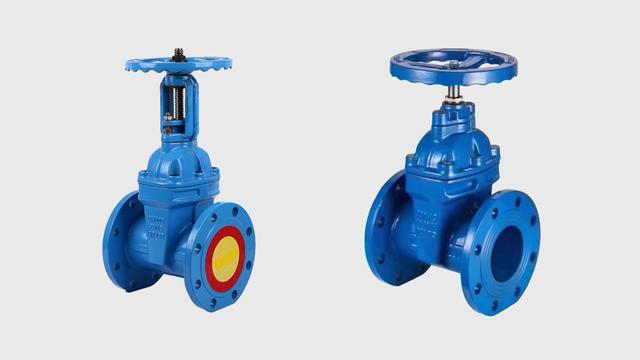
Hauptmerkmale von weichem versiegeltem Gateventil
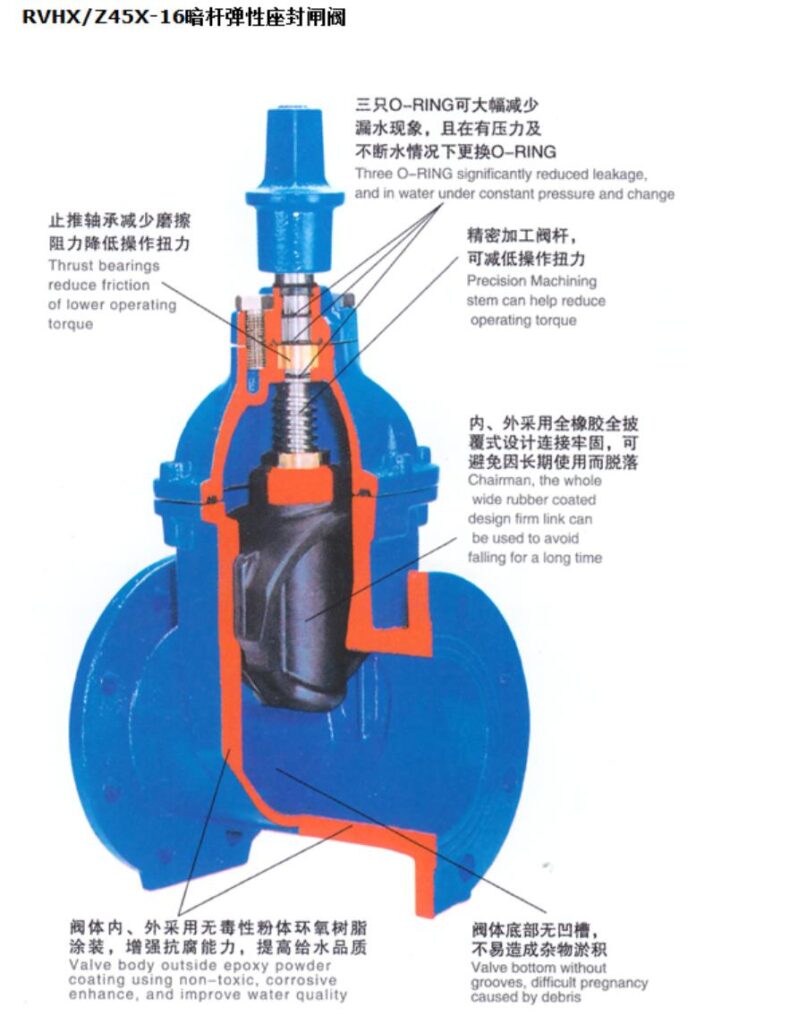
- In a common resilient wedge design, the metal gate is covered with a rubber compound such as EPDM or NBR. The rubber deforms against the seating surface to provide a tight shut-off. The compound needs to suit the water or other medium being handled; EPDM and NBR are not interchangeable choices for every service.
- A smooth body bottom is a useful feature of many resilient-seated designs. It reduces the recess in which debris can collect and gives a clear passage with the valve fully open. Solids in the line still matter: sharp or abrasive particles can damage a soft seat, so describe them when discussing the application.
- Epoxy powder coating helps protect iron valve bodies against corrosion. In a powder-coating process, charged particles are applied to the prepared surface and cured to form a bonded coating. Surface preparation, coverage and curing conditions all affect the result. For drinking-water work, specify the required suitability or approval for the actual coating and wetted materials, rather than relying on the word “epoxy” alone.
- Stem sealing is a separate part of the valve construction. Designs may use O-rings, packing and a dust seal to limit external leakage and protect the operating parts. The number and arrangement of seals depend on the model. Replacement under pressure is a model-specific maintenance provision, not a general instruction for all soft-sealed gate valves.
Replacing a metal-seated water valve with a resilient-seated one: compare the selected products, not just their nominal size. The connection standard, installed length, Druckrate, operator and service requirements all need to match the job. Waterworks specifications may refer to AWWA C509 or applicable GB/T requirements; agree the required standard and edition for the valve being ordered.
Die Hauptunterschiede zwischen den beiden sind
- The gate of a resilient-seated gate valve commonly has a rubber covering, while a metal-seated valve uses metallic sealing surfaces, which may include copper alloys, stainless steel or other specified materials. Repair needs depend on what is worn: the gate, seating surfaces, stem seals and other parts should be considered together. Replacing the gate alone is not a universal repair for leakage.
- A plain-bottom resilient-seated design can reduce debris pockets compared with a traditional recessed metal-seated water valve. That does not mean it cannot collect solids, or that every metal-seated valve has the same internal recess. Compare the actual construction with the cleanliness and solids content of the line.
- Both resilient-seated and metal-seated iron valves can use epoxy coatings. The seat construction does not establish whether a valve will affect drinking-water quality. Compare the specified coating, rubber and other wetted materials against the project requirements.
- Stem seals and service access vary between models. Some designs include a back-seating or other arrangement that permits particular seal work under stated conditions, but this must be confirmed from that valve’s instructions. Plan ordinary maintenance around isolation and depressurisation rather than assuming that opening any gate valve makes seal removal safe.
- Bonnet fasteners and their corrosion protection also vary. Recessed screws, protective caps or sealing compounds can help keep exposed fasteners serviceable, but these details are not exclusive to soft-sealed valves. They are useful points to compare where a valve will remain in a damp chamber for years.
- Resilient seats are widely used in water-service isolation, while suitable metal-seated designs are also used where the medium or temperature calls for a different sealing arrangement. Select the complete valve for the required pressure and temperature; the soft- or hard-seal label alone does not define its operating limits.
Which Construction Should You Enquire About?
For a water supply project calling for a rubber-seated wedge, explore Farpro’s Z41X and Z45X resilient gate valves. If the specification calls for a metal-seated cast iron arrangement, compare the listed configurations in the Z45T/W range. Keep the connection and operating requirements consistent when comparing the offers.
If an existing valve has started leaking, tell us what is being replaced and how it is used. A model reference or nameplate photo gives us a better starting point than the seal description alone. Discuss your gate valve requirement with Farpro, including the quantity and destination, and we can work through the suitable options with you.