
A valve needs remote operation, and the quotation offers a choice of electric or pneumatic actuation. Which should you buy? Start with the installation: whether there is a suitable electrical supply or compressed air at the valve, how often it will operate, and what it must do if that supply is lost.
Both arrangements can turn a ball valve through a quarter turn to open or close the line. The difference is in how the assembly is powered and controlled. For a project buyer, that affects installation work, accessories and the scope of the quotation as well as the initial valve price.
When an Electric Ball Valve Makes Sense

Electric operation is a practical starting point for a water-system extension or plant service where power is available but there is no compressed-air line nearby. It avoids installing an air supply just to operate that valve. The available voltage and the control panel’s requirements still need to match the actuator.
Farpron Q941F electric ball valve range includes stainless steel and cast steel versions. The product page shows the listed material combinations. When comparing assemblies, include the required opening and closing time, operating frequency and position feedback; an actuator intended for occasional isolation is a different purchase from one that must make frequent adjustments.
When a Pneumatic Ball Valve Makes Sense
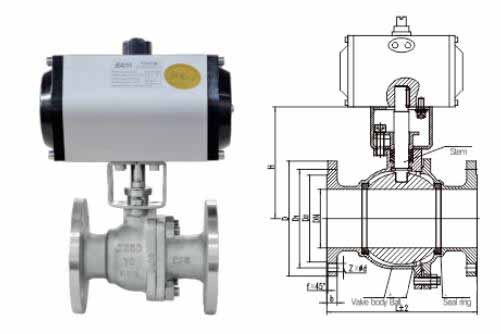
Pneumatic operation is worth comparing where a plant already has a suitable compressed-air supply at the installation. The actuator uses air to move the valve, while accessories connect the assembly to the control system. Air availability means more than having a compressor somewhere on site: the pressure and supply at the valve matter.
Farpron Q641F pneumatic ball valve is an existing stainless steel option. For this type of enquiry, specify whether the project calls for double-acting or spring-return operation, together with any solenoid valve and position indication. Those choices help define the complete assembly being quoted.
Electric vs Pneumatic: What to Compare
| Purchase question | Electric actuation | Pneumatic actuation |
|---|---|---|
| Site supply | Suitable electrical supply at the actuator | Suitable compressed air at the actuator |
| Control requirements | Supply voltage, command and position feedback | Actuator action, solenoid control and position feedback |
| Loss of supply | Specify any required fail-position arrangement | Specify double-acting or spring-return action and the required failure response |
| Installation scope | Cabling, controls and access | Air tubing, air preparation, controls and access |
| Quotation scope | Venttiili, electric actuator and specified controls | Venttiili, pneumatic actuator and specified accessories |
The table is a starting point for comparing offers. It does not make one arrangement universally cheaper or faster. A lower unit price can lose its advantage if the installation needs a new air line, extra controls or accessories that were left out of the offer.
Decide What Should Happen if Power or Air Is Lost
This requirement is easy to miss when ordering an automated valve. A spring-return pneumatic actuator can be arranged to move towards a specified end position when air is removed. A double-acting actuator uses air for both directions and should not be assumed to provide the same response.
Electric actuation also needs an explicit specification if the valve must move after a power failure. That function requires a suitable fail-safe or stored-energy arrangement; it does not follow simply from choosing an electric actuator. State the required response for loss of power, air or control signal so the assembly can be selected accordingly.
Compare the Valve as Well as the Actuator
Changing the drive does not settle the choice of valve body, ball or seats. Keep the fluid, paine, temperature and connection requirements consistent when comparing electric and pneumatic offers. Two valves of the same nominal size may have different materials or connections and may not be equivalent purchases.
For a replacement, the existing model and nameplate photos are useful, along with the available space around the valve. If you are keeping an existing actuator, say so at the beginning: mounting and torque compatibility need to be checked before treating a new valve as a direct replacement.
Discuss Your Ball Valve Requirement with Farpro
You can start with the electric range or the pneumatic range, then send the model, quantity and destination with the site supply you have available. If your specification is still being prepared, a short description of the job is enough to start the discussion.
Contact Farpro for a valve and actuator quotation. Tell us which controls or accessories must be included, and we can discuss the assembly against your project requirements.