
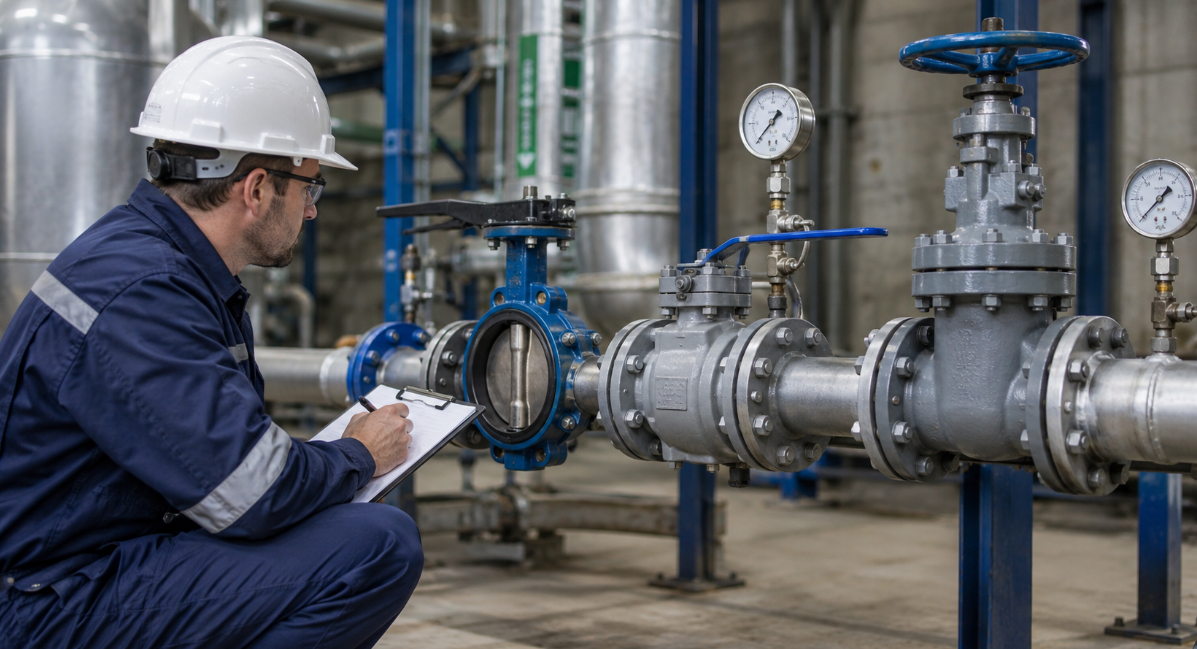
Промышленные здания зависят не только от производственного оборудования. Водоснабжение, дренаж, охлаждение, противопожарная защита, сжатый воздух, обработка химикатов, и технологические трубопроводы требуют надежного управления потоком.
Таким образом, выбор подходящего промышленного клапана – это не просто вопрос выбора правильного диаметра трубы.. Инженеры и отделы закупок должны учитывать возможность, эксплуатационное давление, температура, требования к потоку, место для установки, частота работы, условия обслуживания, и окружающая среда.
В этом руководстве объясняется, как оценить клапаны для обычных промышленных зданий и коммунальных систем, а также где задвижки, дисковые затворы, шаровые краны, и шаровые клапаны обычно являются наиболее подходящими.
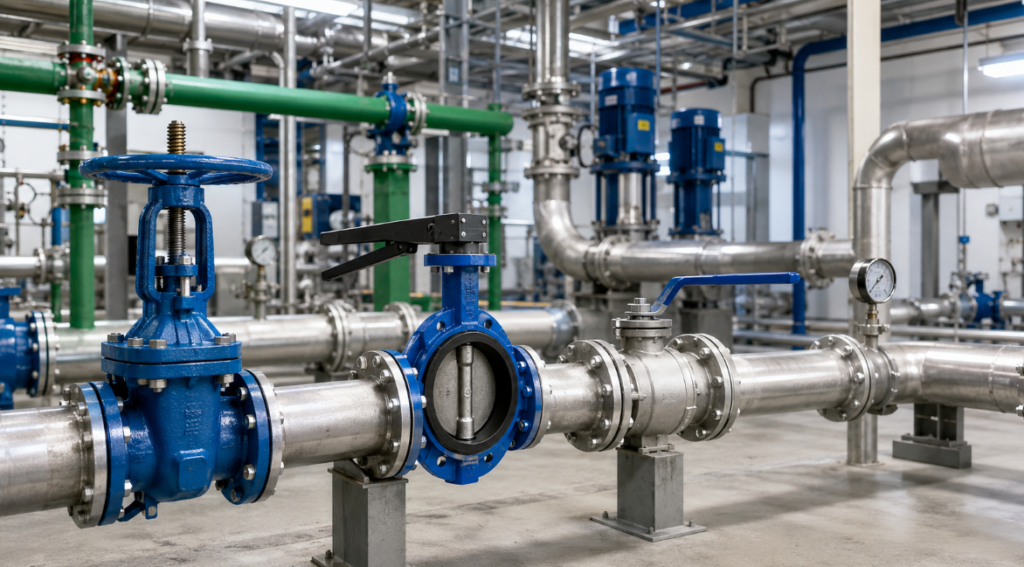
Начните с функции клапана
Прежде чем выбрать тип клапана, точно определить, что должен делать клапан.
Большинство промышленных клапанов выполняют одну или несколько из трех основных функций.:
Изоляция
Клапан обычно полностью открыт или полностью закрыт.. Основное требование – надежное закрытие с приемлемой потерей давления в открытом состоянии..
Регулирование потока
Клапан должен работать в промежуточных положениях для регулирования расхода.. В этом случае, дросселирующие характеристики и устойчивость к эрозии становятся более важными.
Автоматическое или дистанционное управление
Клапан может нуждаться в пневматическом, электрический, или гидравлический привод и может являться частью системы автоматизации предприятия..
Использование запорного клапана для непрерывного дросселирования, или указать клапан, ориентированный на управление, где требуется простое закрытие, может увеличить как первоначальную стоимость, так и требования к долгосрочному техническому обслуживанию..
Задвижки для главных изоляционных линий
Задвижки широко используются, когда трубопровод требует полного открытия или полного перекрытия..
Когда полностью открыт, ворота отодвинуты от основного пути потока. Это делает задвижки особенно полезными на трубопроводах, где желательно низкое гидравлическое сопротивление..
Типичные промышленные применения включают в себя:
- Магистральные трубопроводы водоснабжения
- Системы охлаждающей воды
- Сети противопожарного водоснабжения
- Распределительные линии инженерных сетей
- Технологические трубопроводы большого диаметра
Задвижки, как правило, лучше подходят для изоляции, чем для частого регулирования расхода.. Если держать затвор частично открытым в течение длительного времени, это может подвергнуть затвор и уплотняющие поверхности воздействию более высокой скорости жидкости и износу..
Для систем, в которых клапан обычно остается полностью открытым и закрывается только для технического обслуживания или аварийной изоляции., задвижка часто является практичным вариантом.
Поворотные заслонки для инженерных трубопроводов большого диаметра
В дисковых затворах используется вращающийся диск для управления потоком через трубопровод.. Их компактная конструкция делает их особенно привлекательными для средних- и системы большого диаметра, где пространство для установки, вес клапана, и удобство эксплуатации важны.
А вафельный дроссельный клапан устанавливается между фланцами трубопровода, что позволяет создать относительно компактный узел клапана.
Поворотные затворы часто рассматриваются для:
- Промышленная охлаждающая вода
- Системы очистки воды
- Водяные контуры отопления, вентиляции и кондиционирования воздуха
- Системы противопожарной защиты
- Общее водоснабжение и водоотведение
- Большой диаметр низкий- и трубопроводы среднего давления
По сравнению со многими конструкциями полнокорпусных клапанов, дисковые затворы позволяют значительно сократить необходимое пространство вокруг трубопровода..
Однако, инженерам все равно следует проверить материал сиденья, материал диска, номинальное давление, рабочая температура, совместимость жидкостей, и требуемые характеристики уплотнения перед выбором дроссельной заслонки.
Шаровые краны для надежного четвертьоборотного запирания
В шаровых кранах используется сферический запорный элемент с отверстиями, который вращается приблизительно 90 градусов между открытым и закрытым положениями.
Их быстрая работа и эффективное отключение делают их пригодными для многих промышленных применений и технологических процессов..
А фланцевый шаровой кран обеспечивает болтовое соединение с системой трубопроводов и обычно используется там, где требуются надежные соединения трубопровода и удобное снятие для технического обслуживания..
Типичные области применения включают в себя:
- Трубопроводы химической переработки
- Системы очистки воды
- Нефтегазовые услуги
- Сжатый воздух
- Коммунальные системы
- Изоляция технологической жидкости
При выборе шарового крана следует учитывать не только материал корпуса.. Материал седла особенно важен, поскольку температура, давление, химикаты, взвешенные вещества, и рабочая частота могут влиять на характеристики уплотнения и срок службы..
Проходные клапаны, где важно регулирование расхода
Когда точная регулировка расхода важнее минимальной потери давления, шаровой клапан может быть более подходящим.
Внутренний путь потока позволяет положению диска постепенно влиять на поток., делая шаровые клапаны полезными в таких приложениях, как:
- Регулирование охлаждающей воды
- Паровые системы
- Управление технологическим процессом
- Обходные трубопроводы
- Системы управления инженерными сетями
Компромиссом является более высокое сопротивление потоку по сравнению с типами клапанов, предназначенными в первую очередь для полнопроходной изоляции..
По этой причине, инженерам следует различать клапан, которому просто необходимо остановить поток, и клапан, который должен его активно регулировать..
Прежде чем выбирать клапан, рассмотрите жидкость
Одна и та же конструкция клапана может вести себя по-разному в зависимости от проходящей через него среды..
Чистая вода
Для обычных промышленных систем водоснабжения, чугун, ковкий чугун, углеродистая сталь, и клапаны из нержавеющей стали могут рассматриваться в зависимости от давления, качество воды, и спецификации проекта.
Коррозионные жидкости
Химическая совместимость становится критической, когда кислоты, щелочи, соли, или другие агрессивные среды присутствуют.
Тело, подрезать, корень, уплотнительные поверхности, и материалы седла следует оценивать, а не выбирать клапан только на основании материала его внешнего корпуса..
Жидкости, содержащие твердые вещества
Взвешенные частицы, жижа, осадок, или сточные воды могут повредить уплотняющие поверхности или скапливаться вокруг внутренних компонентов..
Поэтому геометрию клапана и конструкцию уплотнения следует выбирать в соответствии с фактической концентрацией твердых частиц и характеристиками частиц..
Пар и высокотемпературные жидкости
Температура влияет на материалы корпуса, упаковка, прокладки, сиденья, и приводы.
Клапан, подходящий для воды комнатной температуры, не может автоматически использоваться для пара или высокотемпературных технологических жидкостей просто потому, что номинальное номинальное давление кажется достаточным..
Давление и температуру необходимо оценивать вместе
Одной из распространенных ошибок при покупке является проверка номинального давления при игнорировании температуры..
Допустимое рабочее давление может меняться по мере повышения рабочей температуры.. Материал корпуса клапана, материал сиденья, упаковка, запирание, и стандарты фланцев могут влиять на фактические эксплуатационные пределы..
При выборе промышленного клапана, предоставить производителю как минимум:
- Номинальный размер трубы
- Расчетное давление
- Нормальное рабочее давление
- Расчетная температура
- Нормальная рабочая температура
- Жидкость или среда
- Необходимые материалы кузова и отделки
- Концевое соединение
- Метод срабатывания
- Применимый стандарт
Эта информация позволяет производителю клапана оценить область применения, а не просто указать клапан на основе диаметра..
Материалы клапанов должны соответствовать рабочей среде.
Совместимость внутренней жидкости — это только часть выбора материала клапана..
Промышленные предприятия также могут подвергать оборудование воздействию влаги., соль, химические пары, дождевая вода, пыль, и колебания температуры. Эти внешние условия могут способствовать коррозии корпусов клапанов., крепежные детали, приводы, поддерживает, и окружающие трубопроводы.
Для наружных или агрессивных объектов, поэтому инженеры должны учитывать всю рабочую среду.
Этот принцип применим и к самому зданию.. Промышленные объекты, расположенные во влажном, прибрежный, сельскохозяйственный, или химически агрессивных средах часто используются коррозионностойкие конструкционные материалы, чтобы сократить время длительного обслуживания.. Например, производители промышленные кровельные листы предоставить ПВХ, ПВХ, ASA и другие кровельные системы, предназначенные для заводов., склады, семинары, и подобные здания.
Очевидно, что кровельный материал и трубопроводная арматура выполняют совершенно разные функции., но инженерный принцип аналогичен: Выбор материала должен отражать реальную среду обслуживания, а не только первоначальную закупочную цену..
Руководство, Электрический, или пневматический режим?
Активация клапана должна определяться рабочей частотой и архитектурой системы..
Ручное управление
Ручные клапаны обычно подходят, когда:
- Операция проводится нечасто.
- Клапан доступен
- Автоматическое управление процессом не требуется
- Аварийное дистанционное закрытие не требуется
Электрический привод
Электрические приводы могут подойти там, где клапанам требуется дистанционное управление, а электроэнергия легко доступна..
Они обычно интегрируются с системами управления для автоматического открытия и закрытия..
Пневматический привод
Пневматические приводы широко используются в промышленной автоматизации, где уже доступен сжатый воздух..
Они могут обеспечить быструю работу и обычно используются на перерабатывающих предприятиях и в автоматизированных производственных системах..
Размер привода должен соответствовать фактическим требованиям к крутящему моменту клапана, а не только диаметру клапана..
Не выбирайте промышленные клапаны только по цене
Два клапана с одинаковым номинальным диаметром могут иметь совершенно разные характеристики..
Разница в цене может возникнуть из-за:
- Материал корпуса
- Материал отделки
- Материал сиденья
- Процесс литья или ковки
- Класс давления
- Стандарт фланца
- Требования к тестированию
- Конфигурация привода
- Покрытие
- Сертификация
- Требования к проверке
Более низкая закупочная цена не принесет особой выгоды, если клапан требует преждевременной замены., вызывает утечку, увеличивает время простоя при обслуживании, или не может удовлетворить спецификации проекта.
Для подрядчиков, дистрибьюторы, и покупатели промышленных проектов, сравнение клапанов с полной технической спецификацией более значимо, чем сравнение только цен за единицу продукции..
Практический процесс выбора клапана
Для большинства промышленных проектов, Выбор клапана может следовать простой последовательности.
Первый, определить, требуется ли клапан для изоляции, регулирование, невозврат, контроль давления, или автоматизированная работа.
Следующий, определить среду, давление, температура, размер трубы, и ожидаемые условия эксплуатации.
Затем определите подходящий тип клапана и материалы..
После этого, подтвердите необходимый стандарт подключения, класс давления, привод, требования к тестированию, и применимые стандарты проекта.
Окончательно, оценить место для установки, доступ для обслуживания, ожидаемая рабочая частота, и требования к жизненному циклу перед размещением заказа.
Такой подход помогает предотвратить распространенную проблему в сфере промышленных закупок.: выбор клапана, который технически подходит к трубе, но не подходит для применения.
Не существует единого типа клапана, который лучше всего подходил бы для каждого промышленного здания или трубопровода..
Задвижки являются сильными кандидатами для полнопоточной изоляции.. Поворотные затворы представляют собой компактное решение для многих инженерных систем большого диаметра.. Шаровые краны обеспечивают быстрое перекрытие на четверть оборота и надежное уплотнение для широкого спектра промышленных применений., в то время как шаровые клапаны остаются ценными там, где регулирование потока является основным требованием.
Правильный выбор зависит от того, как эти характеристики взаимодействуют с реальной средой., давление, температура, рабочая частота, среда, и стандарты проекта.
Для промышленных проектов, Предоставление полных условий эксплуатации производителю клапана перед запросом ценового предложения является одним из самых простых способов уменьшить ошибки в спецификации и получить конфигурацию клапана, соответствующую реальному применению..