
Two ball valve quotations can list the same pipe size, pressure class and body material, yet offer different flow openings. One says full port; the other says reduced port. Before choosing the lower price, it helps to know whether that difference matters to your line.
A full port ball valve has a flow passage approximately matching the pipe’s internal diameter. A reduced port ball valve has a smaller opening. Full port is often preferred where flow restriction needs to be kept low. Reduced port can be a practical option where the available flow capacity meets the duty. Neither label, on its own, tells you whether the valve is right for the job.
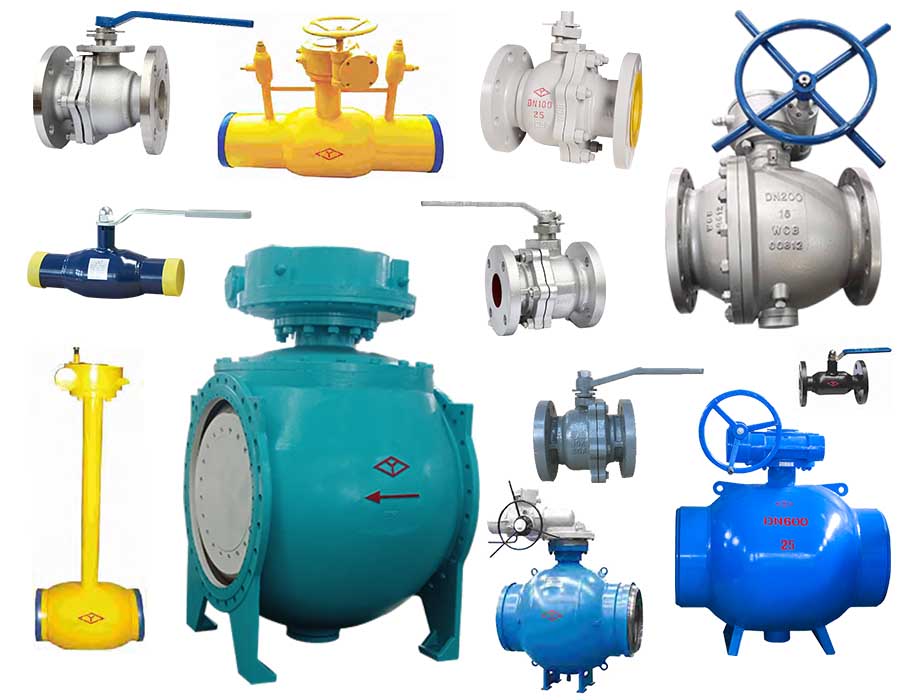
Full Port, Full Bore and Reduced Bore: What the Names Mean
Full port and full bore describe the same general arrangement: an opening through the ball close to the connecting pipe’s internal diameter. Reduced port and reduced bore describe a smaller passage. “Standard port” is also used in catalogues, but it is worth asking for the actual bore rather than relying on the label.
The nominal valve size describes the connection size; it does not necessarily describe the opening through the ball. For example, two DN50 valves may fit the same nominal pipe size while having different internal passages. Check the stated bore and the applicable specification when comparing them.
When Full Port Is Worth Specifying
Full port deserves attention when pressure loss through an open valve matters to the system. This may be relevant on a line carrying substantial flow or where several valves contribute to the total resistance. Ask for the proposed valve’s flow coefficient, Cv or Kv, if a flow-capacity comparison is needed. The bore label alone is not a pressure-drop calculation.
Pipeline pigging is another reason to discuss the bore early. A full-bore passage may be necessary for a pig to pass, but “full port” is not a complete pigging approval. The actual passage, connecting pipe and pig requirements still need to be checked together.
When Reduced Port May Be a Sensible Choice
A reduced port valve can be suitable when the required flow is within its capacity and the additional pressure loss is acceptable. It may offer a more compact or lower-cost option within a comparable product family. Those advantages should be checked on the quotation rather than assumed across different designs.
Consider a utility branch that is not expected to carry the main line’s flow. If the project review confirms that the reduced-bore option meets the duty, paying for full port may bring little benefit. Conversely, an apparently small saving is less attractive if the reduced opening creates a restriction the system cannot accommodate.
Compare More Than the Opening
Keep the rest of the specification aligned before deciding that one offer is better value:
- Service conditions: fluid, operating pressure and temperature, and required flow.
- Valve construction: body and seat materials, pressure designation, connection standard and actual bore.
- Operation: manual, geared or actuated supply, with the included accessories identified.
- Order scope: quantity, inspection requirements, packing and delivery basis.
Full port does not automatically mean a higher pressure rating, better shutoff or a particular actuator size. Those depend on other design features. If automation is part of the enquiry, our electric versus pneumatic ball valve guide covers the operating choice separately.
Questions Buyers Often Ask
Is a full port ball valve always better?
It offers a less restricted passage, which can be valuable for the duty. It is not automatically the best purchase if a reduced-port option meets the specified flow and pressure-loss requirements. Compare the complete valve and the job it needs to do.
Can I replace a reduced-port valve with full port?
Possibly, but the same nominal size does not establish interchangeability. Check connection details, installed length, pressure-temperature rating, materials and operating space. An actuated replacement also needs the appropriate operating package.
Does reduced port mean the valve can regulate flow?
No. A smaller bore is not the same as a purpose-designed control characteristic. If continuous throttling is required, raise that duty separately rather than selecting a standard isolation ball valve by bore alone.
Discuss the Bore Requirement with Farpro
Browse our industrial ball valves to identify a suitable product family, then send Farpro your ball valve enquiry with the size, fluid, pressure, temperature, quantity and destination. State full port or reduced port if the project specification already requires it.
If the bore has not been decided, tell us the required flow or any pressure-loss limit you have. A clear note that the bore remains open for review is more useful than leaving each quotation to make a different assumption.