
A V-port ball valve uses a V-shaped opening in the ball or ball segment to shape the flow passage as the valve turns. In a segmented design, the edge of the V-notch moves against the seat and can provide a shearing action useful in fibrous service.
The V-shaped opening of the sphere forms a fan-shaped area with the valve seat flow channel. It can change the cross-sectional area of the flow channel during the rotary process to form a precise regulation of the medium. It is a kind of angle rotary control valve. Shut-off performance depends on the seat design, materials and the specified leakage requirement.
In addition, it has both regulating and switching functions, and is matched with pneumatic or electric actuators. This design is widely used in industrial process automatic control systems. For automated isolation, compare Farpro’s pneumatic ball valves with the electric range.
Looking for a V-port valve for a control loop? Discuss the duty with Farpro. Start with the fluid, line size, working pressure and temperature, and whether you need continuous regulation or simple opening and closing.
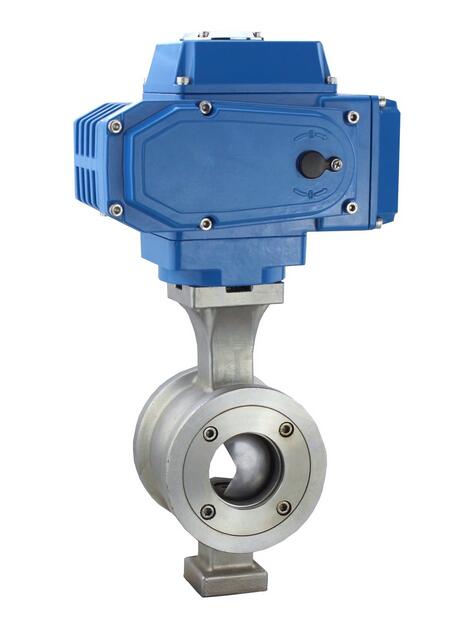
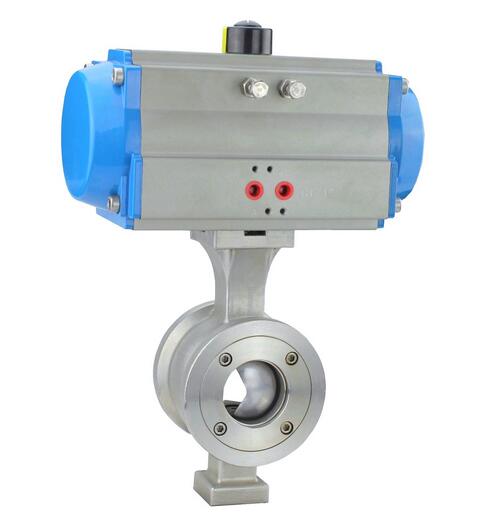
V Port Ball Valve Structure
V-type ball valve ball core with V-shaped structure, a common construction uses a V-notched ball segment. Its features include: V-notch, large flow capacity, adjustable range, shear force, can close tightly, etc.. Therefore it is especially suitable for fluid material with fibrous working conditions.
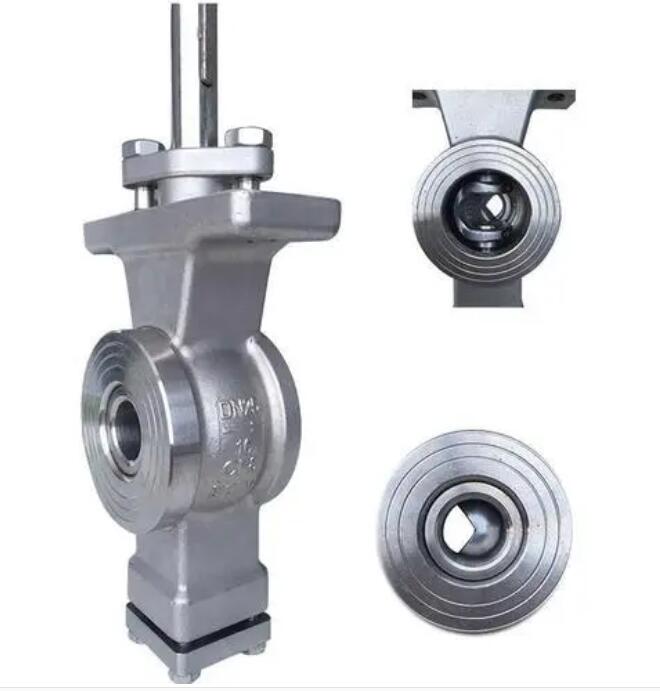
Confirm the permitted flow direction and shut-off direction for the selected valve. A V-shaped opening alone does not establish whether a particular construction is suitable for bidirectional service.
During the rotation of the valve ball, the V-blade of the ball cuts against the valve seat, thus cutting off the fibers and solids in the fluid. The general ball valve does not have this function, so it is easy to cause the fiber impurities stuck when closing, which brings great inconvenience to repair and maintenance. The shearing action can help handle fibers, with performance depending on the fluid and selected trim.
In addition, because the v-ball valve adopts the form of flange connection, it is easy to disassemble and install without special tools. It is also simple and easy to repair and maintain.
When the valve is closed, the v-notch creates a scissor-like action with the valve seat. Such a ball valve design has a self-cleaning function and can prevent the ball core from seizing. It has a metal point-to-point structure for the valve body, cover and seat respectively. In addition, it uses a stem spring with a low coefficient of friction. Therefore, it has a small operating torque and is very stable.
The V-ball valve is a right-angle rotary structure that enables the flow regulation role. It can achieve different degrees of proportional opening and closing according to the V-shaped angle of the V-ball. V port ball valves are generally used with valve actuators and positioners to achieve proportional adjustment.
Advantages of V-ball Valve
1、Small volume, light weight, easy to operate
2、Good sealing performance
3、Easy installation and maintenance
4、Small flow resistance
5、A range of sizes and pressure classes, selected against the specified service and model rating
6、Strong adjustment performance
7、Small opening and closing torque
As a consequence, these advantages determine the v-type ball valve is widely used in petroleum, chemical and other industrial self-control systems.
The Working Principle of V Type Ball Valve
The shaft rotates the V-notched ball or segment through a quarter turn. As it moves across the seat opening, the exposed flow area changes, allowing a suitably selected valve and actuator assembly to regulate flow.
The V-spool valve is most suitable for various regulating situations. Its advantages are: large rated flow coefficient, adjustable ratio, good sealing effect, responsive flow adjustment, small size, and can be installed vertically. In a word, this type is suitable for controlling gas, steam, liquid and other media.
Farpro V-ball valve is a right-angle rotary structure, consisting of V-body, pneumatic actuator, positioner and other accessories. It has an inherent flow characteristic of approximate equal percentage ratio. Has a double bearing structure with low starting torque. So this V port ball valve has excellent sensitivity and sensing speed with superb shearing capability.
Choosing a V-Port Valve for Your Process
For continuous regulation, the normal, minimum and maximum flow rates help define the duty, together with inlet and outlet pressures. If the fluid carries fibers or solids, describe them too. These details matter more than ordering by line size alone.
For automation, our electric vs pneumatic ball valve comparison explains the site supply and controls to consider. Specify the control signal and any positioner requirement for a regulating duty. The existing isolation-valve ranges linked above are starting points for on/off enquiries, not a statement that every actuated ball valve is a V-port control valve.
If you are still deciding on the construction, the eccentric half-ball and V-type comparison covers the different questions to bring to a supplier. You can send a short description of the job before a complete specification is ready.