
Wedge and parallel gate valves both isolate flow by moving a gate across the pipeline. The difference is in the seating arrangement: a wedge gate fits between angled seats, while a parallel gate works between parallel seats. That distinction affects closing force, thermal behaviour and the details worth checking for your application.
For water supply, steam or process duty, neither design can be selected from its name alone. The medium, operating conditions, seating construction and available installation space all matter.
Wedge designs include solid, flexible and split wedges. Parallel designs include slide, slab and expanding arrangements; their sealing mechanisms are not identical. The sections below explain those differences before comparing the options.

In a parallel gate valve, the opposing seating faces are parallel. Depending on the construction, sealing may rely on differential pressure, spring loading or a mechanical expanding arrangement.
In a wedge gate valve, the gate and angled seats develop contact as the stem closes the valve. Solid, flexible and split wedges accommodate alignment and temperature changes in different ways. Wedge angle is a design detail, not a setting to choose from operating temperature alone.
The comparison is most useful when it is tied to a duty: shutting off a water main, isolating a steam line or providing a clear passage through a pipeline. Start with the service, then compare the actual constructions available.
Farpro supplies both wedge gate valves and parallel gate valves. Here is what to look at when deciding which arrangement suits your line.
How Gate Valves Open and Close
Both designs are normally used fully open or fully closed. Keep their common operating features in mind before comparing the seats:
-
Operating Principle: By rotating a handwheel or activating an actuator, the valve stem is driven to perform a lifting motion (Outside Screw & Yoke – OS&Y type) or remain in place while the gate moves (Non-Rising Stem – NRS type). This action drives the connected gate up or down within the valve body, perpendicular to the fluid channel. When the gate is fully lifted, the passage is completely open, offering minimal resistance to flow. When the gate is fully lowered and seals tightly against the valve seat, the passage is completely closed, achieving shut-off.
-
Main Advantages:
-
Low Flow Resistance: When fully open, the gate is completely withdrawn from the flow path, allowing the medium to flow almost straight through, resulting in very low pressure drop.
-
Relatively Low Operating Torque: Compared to globe valves, the gate moves perpendicular to the flow direction, requiring less force to overcome fluid pressure during opening and closing.
- Flow direction: Many gate valves are bidirectional. Confirm any flow arrow and model-specific direction requirement, particularly where the design includes a relief or bypass arrangement.
-
Wide Range of Applications: Suitable for various media (liquids, gases, steam, slurries, etc.), pressures, and temperature ranges.
-
Relatively Simple Structure, Easy Maintenance.
-
-
Main Disadvantages:
-
Not Suitable for Throttling: In a partially open state, high-velocity fluid can easily erode the sealing surfaces, leading to valve damage and leakage. Furthermore, the relationship between flow rate and opening percentage is non-linear, making precise flow control difficult.
-
Slow Operation: The gate has a relatively long travel distance, requiring significant time to complete a full open or close cycle.
-
Large Overall Dimensions and Height: Especially for OS&Y types, the rising stem requires considerable overhead space when the valve is open.
-
Sealing Surfaces Prone to Abrasion: During opening and closing, relative friction occurs between the gate and seat sealing surfaces, particularly under pressure or when the medium contains solid particles.
-
Features of Parallel Gate Valves
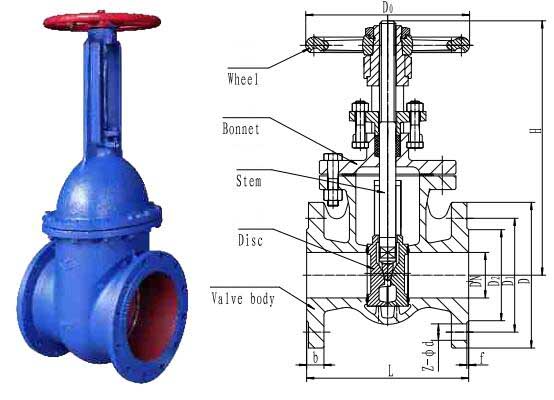
Some parallel gate valves use two discs and an expanding mechanism between them. Others use a slab or a parallel slide arrangement. These constructions share parallel seating faces, but they develop seat contact in different ways.
In an expanding double-disc design, a mechanical arrangement spreads the discs against the seats near the closed position. On opening, the expanding force is released so the discs can move. A spring-assisted parallel slide design works differently, so it is worth identifying the actual mechanism.
Parallel Slab Gate Valve / Through-Conduit Gate Valve:
-
-
-
Structure: Typically features a single, flat gate (slab) with a bore (port) machined through it, matching the pipeline diameter. The slab slides between two parallel seats.
-
Operation: To close, the slab slides down, and its solid portion blocks the flow path. To open, the slab slides up, aligning the through-conduit port with the pipeline, creating a smooth, unobstructed passage. Sealing usually relies on line pressure pushing the slab against the downstream seat (self-sealing), sometimes assisted by spring-loaded seats providing initial sealing force.
-
Advantages:
-
Minimal Flow Resistance: When fully open, the port matches the pipe bore, offering a smooth, non-restrictive flow path, ideal for pipelines requiring low pressure drop, such as long-distance transport lines.
-
Sealing Surface Protection: In both fully open and fully closed positions, the sealing surfaces are shielded from the main flow, protecting them from erosion and wear, especially suitable for media containing solid particles or abrasives.
-
Suitable for Pigging: The smooth through-conduit allows pipeline inspection gauges (Pigs) to pass through.
-
Relatively Lower Operating Torque: Primarily needs to overcome friction, no wedging force involved.
-
-
Disadvantages:
-
Sealing tightness at low pressure might be less positive than wedge types, as self-sealing effectiveness depends on sufficient differential pressure.
-
Structural dimensions, particularly face-to-face length, can be larger.
-
Manufacturing costs can be higher, especially for large diameters and high pressure ratings.
-
-
-
Parallel Double Disc Gate Valve:
-
-
-
Structure: Comprises two parallel discs, usually with a spring or spreader mechanism (like a wedge or toggle) located between them.
-
Operation: As the gates descend near the closed position, the spring or spreader mechanism activates, forcing the two discs outwards against their respective upstream and downstream seats, achieving a double seal. During opening, this spreading force is released first, allowing the discs to lift freely.
-
Advantages:
-
Excellent Bidirectional Sealing: Provides effective sealing regardless of the direction of flow or pressure.
-
Reliable Low-Pressure Sealing: The mechanical spreading force ensures a tight seal even at very low differential pressures.
- Thermal behaviour: A parallel arrangement avoids the wedging action associated with wedge binding. Pressure locking, trapped cavity pressure and operating conditions still need to be considered for the specific design.
-
Potential for Self-Relieving Function: Some designs allow overpressure trapped in the body cavity to automatically bleed off to the upstream side, enhancing safety (specific design must be confirmed).
-
-
Disadvantages:
-
Relatively complex structure with more parts, leading to higher manufacturing and maintenance costs.
-
Potential for debris accumulation between the discs, which could affect sealing or operation.
-
Typically larger and heavier than wedge gate valves of the same specification.
-
-
-
Parallel Gate Valve Characteristics Summary:
- Parallel seating avoids a wedge angle; check the actual design for thermal cycling and cavity-pressure requirements.
-
Relatively lower operating torque (especially slab gate type).
-
Through-conduit design protects sealing surfaces, suitable for particulate media and pigging operations.
- Mechanically expanding double-disc designs can provide positive seat contact, including at low differential pressure; confirm the specified leakage performance.
Disadvantages:
-
Single-gate self-sealing types may have weaker sealing at very low pressures.
-
Double disc types are structurally complex, costly, and bulky.
-
High manufacturing precision required, especially for parallelism and flatness.
Typical Application Areas:
-
Oil and gas long-distance pipelines (primarily through-conduit parallel slab gate valves, often to API 6D).
-
High-temperature steam lines (e.g., main steam lines in power plants, often using double disc parallel types).
-
Refineries and chemical plants for high-temperature, high-pressure services or where pigging is required.
-
Low-pressure gas distribution lines.
-
For a pipeline connection, compare the actual end dimensions and operator envelope. Parallel construction alone does not guarantee a smaller or lighter valve than a wedge design of the same rating.
Features of Wedge Gate Valves

A wedge gate fits between inclined seats. The wedge may be a solid piece, a flexible design or a split construction that allows the disc elements to align with their seats.
More complex gate assemblies introduce additional components to inspect and maintain. Cleanliness of the service, wear and access to internal parts affect how practical each construction will be over time.
Solid wedges provide a straightforward construction. Flexible wedges accommodate some distortion through their geometry; resilient-seated water valves instead use an elastomeric sealing arrangement. Flexible wedge and resilient seat describe different features.
Wedge angle: The angle belongs to the valve design and works together with gate flexibility, seat geometry and the operating load.
- Temperature changes: Uneven heating or cooling can affect seat contact and opening force. Flexible and split wedges help accommodate distortion, but the complete design and operating procedure still matter.
- What to confirm: Use the model specification or sectional drawing for the wedge construction and angle. Do not assume one angle or a simple temperature rule applies to all wedge gate valves.
Main Structural Types:
-
Solid Wedge Gate Valve:
-
Structure: The gate is a single, solid wedge piece.
-
Advantages: Simplest structure, robust, durable, relatively low cost, less prone to trapping debris, suitable for most general applications, especially in small to medium sizes and low to medium pressures.
-
Disadvantages: Poor adaptability to sealing surface machining inaccuracies and valve body deformation. Temperature changes or pipeline stresses can lead to poor sealing or gate jamming (thermal binding). Closing under high differential pressure can create excessive wedging force, making opening difficult.
-
-
Flexible Wedge Gate Valve:
-
Structure: The main body of the gate is still wedge-shaped, but features cuts, slots, or a specific peripheral design allowing it some elastic deformation capability.
- Advantages: A flexible wedge can accommodate some seat misalignment and body distortion. Its flexibility can reduce binding concerns compared with a rigid wedge, without making the valve immune to difficult operating conditions.
-
Disadvantages: Structure is slightly more complex than a solid wedge, leading to a marginally higher manufacturing cost. Not ideal for media containing significant solid particles or prone to scaling, which could clog the flexible structure.
-
-
Split Wedge / Double Disc Wedge Gate Valve:
-
Split wedge construction: Two separate disc elements form the wedge and can align with their seats. This is distinct from a parallel double-disc valve with a separate expanding mechanism.
-
Advantages: Both sealing surfaces can achieve independent contact with the seats, providing excellent self-alignment. This offers better adaptability to seat angle variations and body deformation, resulting in superior sealing performance, especially under high pressure and high temperature conditions. Minor sealing surface wear can be compensated for by the outward movement of the discs. Less prone to thermal binding.
-
Disadvantages: Most complex structure, more parts, higher manufacturing cost, relatively more difficult to assemble and repair. Potential for media to become trapped between the discs. In designs with bottom guides, corrosion and detachment of these guides over time can impair function.
-
Wedge Gate Valve Characteristics Summary:
-
Advantages:
-
Excellent sealing performance: Relies on wedging action for positive sealing, providing high sealing pressure and reliability.
-
Relatively compact structure (compared to parallel gate valves of the same size).
-
Wide range of applications: Suitable for various pressures, temperatures, and media (selection depends on materials and specific structure).
-
Mature technology, highly standardized (e.g., API, ASME standards).
-
-
Disadvantages:
-
Risk of thermal binding: Especially with solid wedges in applications with significant temperature fluctuations or cooling after high-pressure closure.
-
Relatively high operating torque: Must overcome the friction associated with the wedging action.
-
Sealing surfaces prone to wear: Due to relative sliding friction during operation.
-
Not suitable for rapid opening/closing.
-
Typical Application Areas:
-
Power industry (steam lines, feedwater systems, ash handling systems, etc.)
-
Oil and gas (oilfields, refineries, some pipeline applications)
-
Chemical industry (various process fluid lines)
-
Metallurgy and mining (process water, slurry handling, etc.)
-
Municipal water supply and wastewater treatment
-
Body, stem, seats, packing and gasket materials should be considered together. A hard-faced metal seat and a resilient water-service seat suit different duties. Use the selected model specification to compare the actual materials and pressure-temperature rating.
Wedge Gate Valve vs. Parallel Gate Valve – In-Depth Comparison
The table summarises common differences. Compare actual models of the same size, rating and material before using it to make a purchase decision.
| Feature Comparison | Wedge Gate Valve Parameter | Parallel Gate Valve Parameter |
|---|---|---|
| Sealing Principle | Relies on wedging action between gate and seats for forced sealing. | Relies on media pressure (self-sealing) or mechanical force (spring/spreader) pushing/spreading gate(s) against seat(s). |
| Sealing Reliability | Wedging action establishes seat contact. Leakage performance depends on the seat design, materials and specified test requirements. | Pressure-assisted or mechanically expanded seating, depending on construction. Low-pressure performance must be checked for the model. |
| Operating Torque | Relatively higher, needs to overcome wedging friction. | Relatively lower (esp. slab gate), mainly overcomes sliding friction. |
| Thermal Binding Risk | Exists, especially for solid wedge in high temp/fluctuating temp. Flexible/split wedge types mitigate this. | Avoids wedge-angle binding; pressure locking and operating conditions still require design-specific consideration. |
| Media Suitability | General isolation duty with materials and seats selected for the fluid. Abrasive service needs particular attention. | Through-conduit designs may suit piggable pipelines; suitability for solids depends on the passage and seating details. |
| Flow Resistance (Full Open) | Very low. | Through-Conduit: Extremely low, smooth bore. Double Disc: Also very low. |
| Structural Complexity | Solid/Flexible Wedge: Relatively simple. Split Wedge: More complex. | Slab Gate: Relatively simple (but needs high precision). Double Disc: Complex. |
| Cost | Solid/Flexible Wedge: Generally lower cost. Split Wedge: Higher cost. | Cost varies with construction, size, rating, materials and inspection scope; there is no universal price order. |
| Size and Weight | Relatively compact. | Often larger and heavier (esp. double disc and long-pattern through-conduit types). |
| Maintainability | Relatively simple (single wedge). Split wedge more complex. | More complex, especially double disc type. |
| Primary Applications | General industry, medium-high pressure, forced sealing needed, where binding risk is managed. | Long pipelines, high temp, thermal cycling, particulate media, pigging required, low torque needs. |
| Typical Standards | API 600, API 603, ASME B16.34 | API 6D (Pipeline Valves), ASME B16.34 |
Selecting a Valve for the Duty
Start with the line conditions and the job the valve must do. The following points are useful when comparing an offer or discussing a replacement with our team.
Medium, Pressure and Temperature
- Media Properties: Is it a clean fluid, gas, steam, or does it contain solid particles, slurry, viscous material, or crystallizing substances? This directly impacts whether sealing surface protection is needed (advantage: parallel slab gate) or if specific materials and structures are required.
- Pressure Rating: In high-pressure applications, the positive sealing of a wedge gate valve (especially split wedge) can be very reliable, but consider the operating torque and potential binding issues under high differential pressure. Parallel double disc types also perform well under high pressure.
- Temperature changes: For steam and thermal-cycling duties, compare the complete gate and seat arrangement, body materials and operating procedure. Parallel slide and flexible wedge designs address these conditions differently.
Operating Requirements
- Leakage requirement: State the required seat-test standard and acceptance criterion. Neither the number of discs nor the gate shape alone guarantees a particular leakage class.
- Operating frequency: Gate valves are normally chosen for isolation rather than flow regulation. If frequent cycling is needed, check the operator, opening time and maintenance requirements for that duty.
- Pipeline pigging: Specify the required clear passage and pig dimensions. A suitable through-conduit design can provide that passage; the name parallel gate alone does not guarantee it.
- Need for Automatic Cavity Pressure Relief: Certain parallel double disc gate valves offer this safety feature; confirm based on specific process requirements.
Installation and Maintenance
-
-
Purchase scope: Compare offers for the same materials, size, rating, operator and inspection requirements. Otherwise a price difference may reflect a different specification.
-
Maintenance Convenience and Cost: Simpler structures usually mean easier maintenance. Consider the valve’s expected lifespan, maintenance intervals, and replacement costs.
-
Space and Weight Constraints: Parallel gate valves are often larger and heavier, requiring consideration of installation space and support structures.
-
Industry Codes and Standards:
-
-
Ensure the selected valve complies with relevant industry codes (e.g., oil & gas, power, chemical) and standards (e.g., API, ASME, EN, GB). All Farpro YD Valve products are designed and manufactured in strict accordance with international and national standards.
-
Before You Request a Quotation
- Describe the duty: Share the medium, size, working pressure and temperature. For a replacement, the existing model or a photo of the nameplate gives us a useful starting point.
-
Focus on Quality and Brand Reputation: Valves are critical equipment; choosing a reliable brand with a proven quality record is essential. Farpro YD Valve operates under robust quality management systems (e.g., ISO 9001) and utilizes advanced manufacturing and testing equipment to ensure every valve meets high-quality standards.
- Think beyond the unit price: Include installation work, access for servicing and the consequences of an unplanned shutdown when comparing alternatives.
- Clarify support: Discuss any drawing review, inspection documents or spare parts needed for the order before finalising the specification.
Which Arrangement Suits Your Line?
A wedge gate valve is a familiar option for many isolation duties. A parallel arrangement may be preferable where its seating mechanism or through-conduit construction answers a specific operating need.
- Wedge gate valves: Compare solid, flexible and split constructions against the temperature changes, seat requirements and operating loads of the line.
- Parallel gate valves: Distinguish slide, slab and expanding designs. Their sealing forces, low-pressure behaviour and passage geometry can differ substantially.
For an existing line, the right construction still has to fit. Check face-to-face length, connections, full-open height and access to the operator before agreeing the model.
Browse the Farpro gate valve range to compare the listed models and materials. If the application calls for a particular seating construction, include it in the enquiry so we can discuss the relevant options.
Have an existing valve to replace? Send us its model or a photograph, together with the operating conditions, and we can work through the selection with you.