
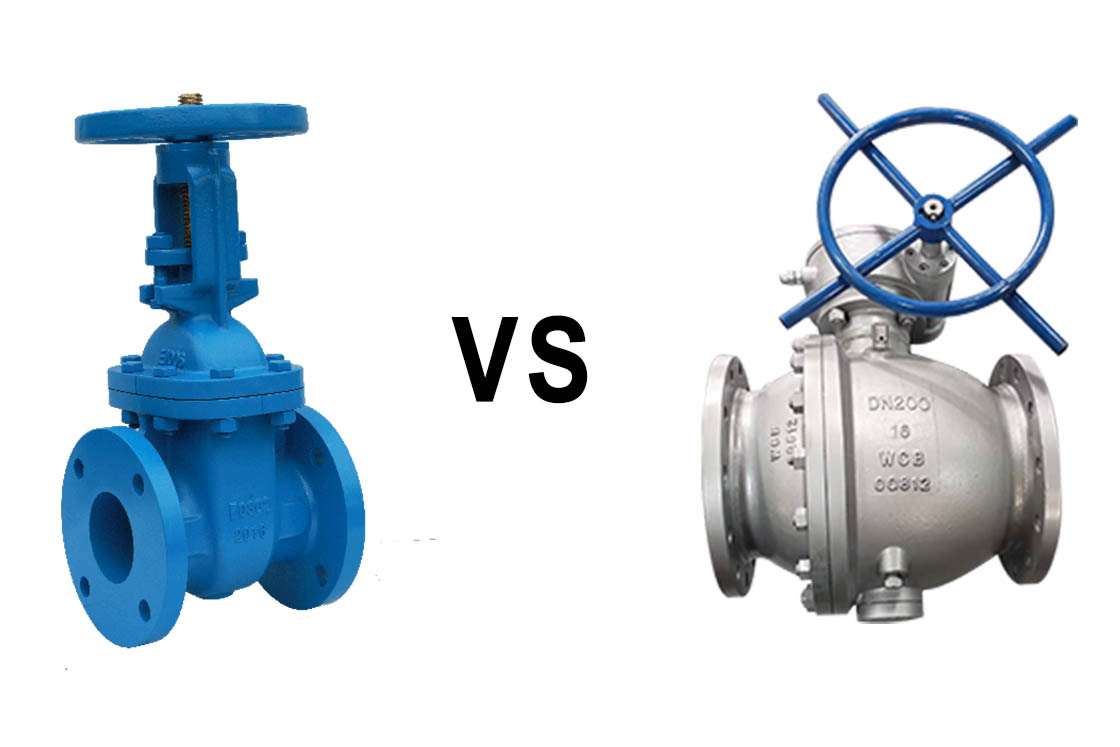
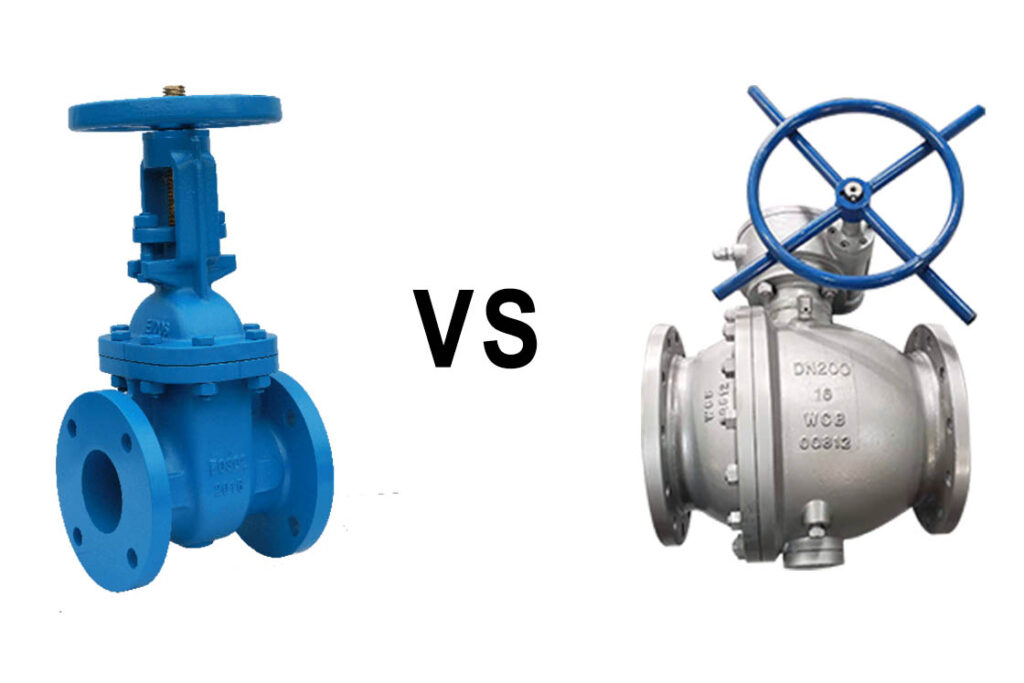
For a water-system extension, a plant utility line or a valve replacement, the choice starts with how the line will be operated. Gate valves and ball valves both provide isolation, but their operating movement, space requirements and available constructions differ. Match those differences to the job before comparing prices.
Choosing the right valve for a particular application is crucial for ensuring efficient operations, preventing potential safety hazards, and avoiding unnecessary costs. The decision between using a gate valve or a ball valve depends on various factors such as the type of fluid being controlled, the pressure and temperature conditions, and the specific requirements of the system.
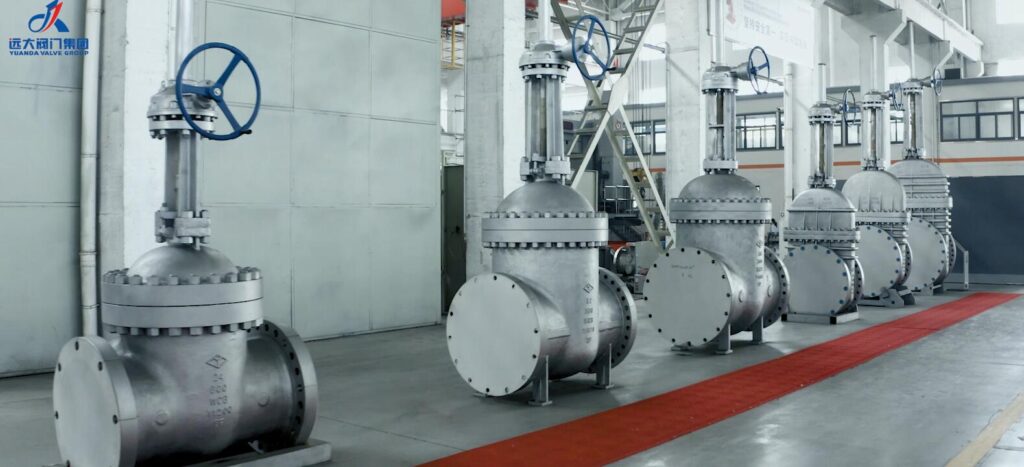
Gate valves are typically used in applications where a straight-line flow with minimal restriction is required. They feature a sliding gate that moves up and down to control the flow of fluid through the valve. When fully open, gate valves allow unrestricted flow with low pressure drop. This characteristic makes them ideal for applications that require full flow capacity without significant resistance.
On the other hand, ball valves are known for their versatility and durability. They consist of a spherical disc (the “ball”) with a hole in it that aligns with the pipe when opened or blocks it when closed. Ball valves offer excellent shut-off capabilities due to their tight sealing mechanism, making them useful for quarter-turn isolation. Pressure and temperature suitability depend on the body, seats, seals and rated construction of the particular valve.
Operating frequency affects the choice of operator and the service expected from the valve. A multi-turn gate valve can suit a line that normally stays open and is closed for isolation. A quarter-turn ball valve can be convenient where local opening and closing is frequent. Compare the expected duty and operating effort for the proposed models.
In summary, understanding when to use gate valves versus ball valves is crucial for selecting the best valve for a specific application. By considering factors such as flow requirements, pressure conditions, and operational frequency, engineers, technicians, and professionals in the plumbing and industrial sectors can make informed decisions that optimize efficiency, ensure safety, and minimize costs.
At Farpro Valve, we understand the importance of choosing the right valve for your applications. Our team of experts is dedicated to providing reliable recommendations and high-quality gate valves and ball valves that meet your specific needs. Trust our expertise to help you make the best choices for efficient operations and safe fluid control systems.
Gate Valves
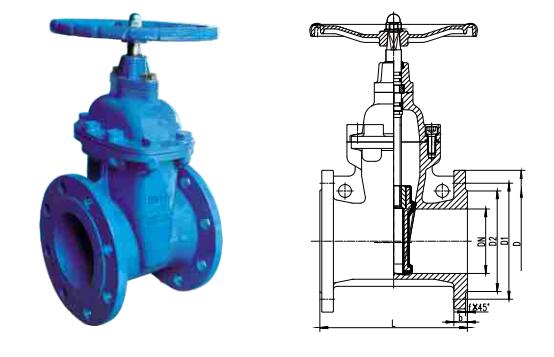
Gate valves are a type of valve that is widely used in various industries, including the oil and gas industry, water treatment plants, and power generation plants. These valves are designed to control the flow of fluids by using a sliding gate or wedge mechanism. Gate valves offer several advantages, but they also have some disadvantages that need to be considered when choosing the right valve for specific applications.
Advantages of Gate Valves
One of the key advantages of gate valves is their ability to provide a tight seal. When fully closed, gate valves create a complete seal, preventing any leakage or loss of fluid. This feature makes gate valves ideal for applications where maintaining a tight seal is crucial, such as in pipelines carrying hazardous or corrosive substances.
Another advantage of gate valves is their full flow capacity. Unlike some other types of valves that may restrict the flow due to their design, gate valves allow for unobstructed flow when fully open. This characteristic makes gate valves suitable for high-pressure applications where maximizing flow rates is essential.
Disadvantages of Gate Valves
Despite their advantages, gate valves also have some limitations that need to be considered. One disadvantage is their slow operation compared to other types of valves. The sliding gate mechanism requires multiple turns to fully open or close the valve, which can result in slower response times. In situations where quick adjustments or frequent opening and closing are necessary, gate valves may not be the most efficient choice.
Gate valves are also prone to corrosion and accumulation of debris over time. The sliding gate mechanism can trap particles and contaminants present in the fluid flowing through the valve. This accumulation can affect the smooth operation of the valve and potentially lead to blockages or malfunctions if not properly maintained.
Additionally, gate valves are not suitable for throttling purposes. Throttling refers to adjusting the flow rate by partially opening or closing the valve. Gate valves are designed primarily for fully open or fully closed positions, and attempting to use them for throttling can result in excessive wear and damage to the valve mechanism.
Applications of Gate Valves
Gate valves find extensive use in various industries due to their specific advantages. In the oil and gas industry, gate valves are commonly employed in pipelines and refineries for their ability to provide a tight seal and handle high-pressure conditions. Water treatment plants also utilize gate valves for controlling the flow of water during different treatment processes. The power generation sector uses suitable gate valves to isolate steam and other fluid lines within power plants.
In summary, understanding the advantages and disadvantages of gate valves is crucial when selecting the right valve for specific applications. Gate valves offer a tight seal, full flow capacity, and are suitable for high-pressure environments. However, they have limitations such as slow operation, susceptibility to corrosion and debris accumulation, and unsuitability for throttling purposes. By considering these factors, engineers, technicians, and professionals in plumbing and industrial sectors can make informed decisions when choosing between gate valves and other types of valves for their applications.
For a replacement, start with the existing nameplate, connection standard and installed length. A photo showing the available space around the operator is useful too. These details help identify a practical replacement before changing from one valve type to another.
Ball Valves
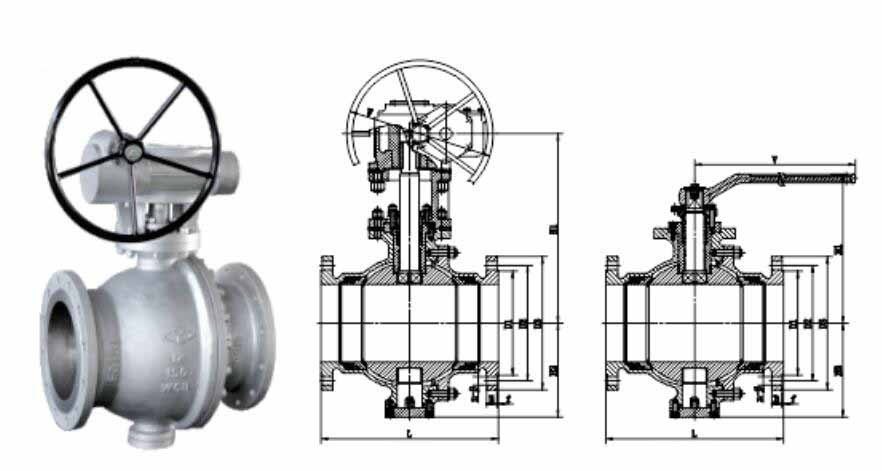
Ball valves are a type of quarter-turn valve that uses a hollow, perforated, and pivoting ball to control the flow of fluids. They are widely used in various industries due to their numerous advantages.
Advantages of Ball Valves
One of the main advantages of ball valves is their quick and easy operation. With just a quarter turn of the lever or handle, the valve can be fully opened or closed. This feature allows for efficient flow control and minimizes the time required for manual operation.
Another advantage is their good sealing properties. The design of ball valves ensures a tight seal when closed, preventing any leakage or seepage of fluids. This makes them suitable for applications where leak prevention is crucial, such as in gas pipelines or water treatment plants.
Continuous regulation calls for a ball valve designed for control duty, such as an appropriate V-port or characterized design. A standard isolation ball valve should not be selected for throttling simply because it can be held partly open. The trim and control arrangement must suit that duty.
Disadvantages of Ball Valves
Bore size is one of the details to compare. A full-bore ball valve offers a passage close to the pipe diameter; a reduced-bore version has a smaller opening and may produce a greater pressure drop. Check the specified bore and flow requirement instead of treating restricted flow as a limitation of every ball valve.
In addition, low-quality ball valves may have potential for leakage. It is important to choose high-quality valves from reputable manufacturers to ensure reliable performance and prevent any safety hazards.
A pressure class alone does not settle the choice. Check the pressure-temperature rating for the proposed body and seating materials, along with the required shut-off duty. Ball valves are available for high-pressure service, but a lower-rated model is not a substitute for the specified construction.
Applications of Ball Valves
Ball valves find extensive use in various industries and systems due to their versatility. They are commonly employed in plumbing systems for residential and commercial buildings, where they provide reliable shut-off capabilities and allow for easy maintenance.
In chemical processing plants, ball valves are preferred for their ability to handle corrosive fluids and withstand harsh chemical environments. An appropriate material and seat combination can provide isolation in compatible chemical-service lines.
Food and beverage duties may require sanitary ball valves with suitable wetted materials, seals and cleanable connections. State the hygiene and cleaning requirements when enquiring. An ordinary industrial ball valve should not be assumed to provide the same construction as a sanitary process valve.
Choosing the Best Valve for Your Applications
When it comes to choosing the best valve for your applications, there are several factors that need to be considered. One of the key factors is the specific requirements of your application. Gate valves and ball valves have different features and functions, and understanding these differences will help you make an informed decision.
For applications that require a tight shut-off, gate valves are often the preferred choice. Gate valves provide a full flow with low pressure drop, making them suitable for applications where flow control is not a priority. These valves are designed to either fully open or fully close, providing a tight seal when closed. This makes gate valves ideal for applications that require isolation or on/off control.
For a line that needs frequent local shut-off, a ball valve offers a convenient quarter-turn movement. Check the handle sweep or gearbox access, as well as the operating torque at the expected pressure difference. For remote operation, the selected actuator needs to match the valve and the site control requirements.
Pressure and temperature requirements apply to both valve families. Compare the actual ratings, body materials and seating arrangements, including any start-up or shutdown conditions that differ from normal operation. Thermal movement and seat-material limits are construction-specific considerations, so choosing by the words “gate” or “ball” alone is not enough.
In contrast, ball valves can handle a wide range of temperatures and pressures. They are often used in industries such as oil and gas, chemical processing, and water treatment where both high pressures and temperatures are common.
Water Supply and Building Services
For a water main that normally remains open and is closed for isolation, the Z41X/Z45X resilient wedge gate valve page provides existing configurations to compare. State any drinking-water, coating or project approval requirement in the enquiry so it can be checked against the offered product. For a service branch where quarter-turn operation matters, compare the required size and rating with the Q41F floating ball valve configurations.
Plant Lines with Remote Operation
Where the job calls for automated isolation, consider the supply already available at the valve. The existing Q941F electric and Q641F pneumatic pages show different assembly options. Our electric vs pneumatic comparison explains the supply, controls and accessories to include when comparing offers. These are isolation choices; the need for continuous regulation should be specified separately.
For the broader mechanical comparison, see gate valves vs ball valves: pros and cons. Here, use the application and installation details to narrow the choice to a product that fits the job.
Conclusion
The importance of understanding the differences between gate valves and ball valves cannot be overstated. These two types of valves play a crucial role in various industries, including plumbing and industrial sectors. By knowing their advantages and disadvantages, professionals can make informed decisions when selecting the right valve for specific applications.
Choosing the wrong valve can have serious consequences. Operational issues, inefficiencies, and potential safety hazards can arise if the wrong valve is used. For example, gate valves are known for their ability to provide a tight seal, making them ideal for applications where leakage must be minimized or prevented altogether. Ball valves offer convenient quarter-turn isolation; continuous regulation requires a valve and control arrangement designed for that purpose.
To ensure efficient operations and safety, it is essential to consult with experts in the field. The Farpro valve team has extensive knowledge and experience in recommending the best gate and ball valves for different applications. Their expertise can help professionals avoid costly mistakes and select the most suitable valve for their specific needs.
Discuss your valve requirement with Farpro. Send the fluid, line size, working pressure and temperature, quantity and destination. Tell us whether this is a new installation or a replacement, and whether the valve will be operated locally or remotely. A short description of the job is enough to start the conversation.